Important Documents Checklist for Executors
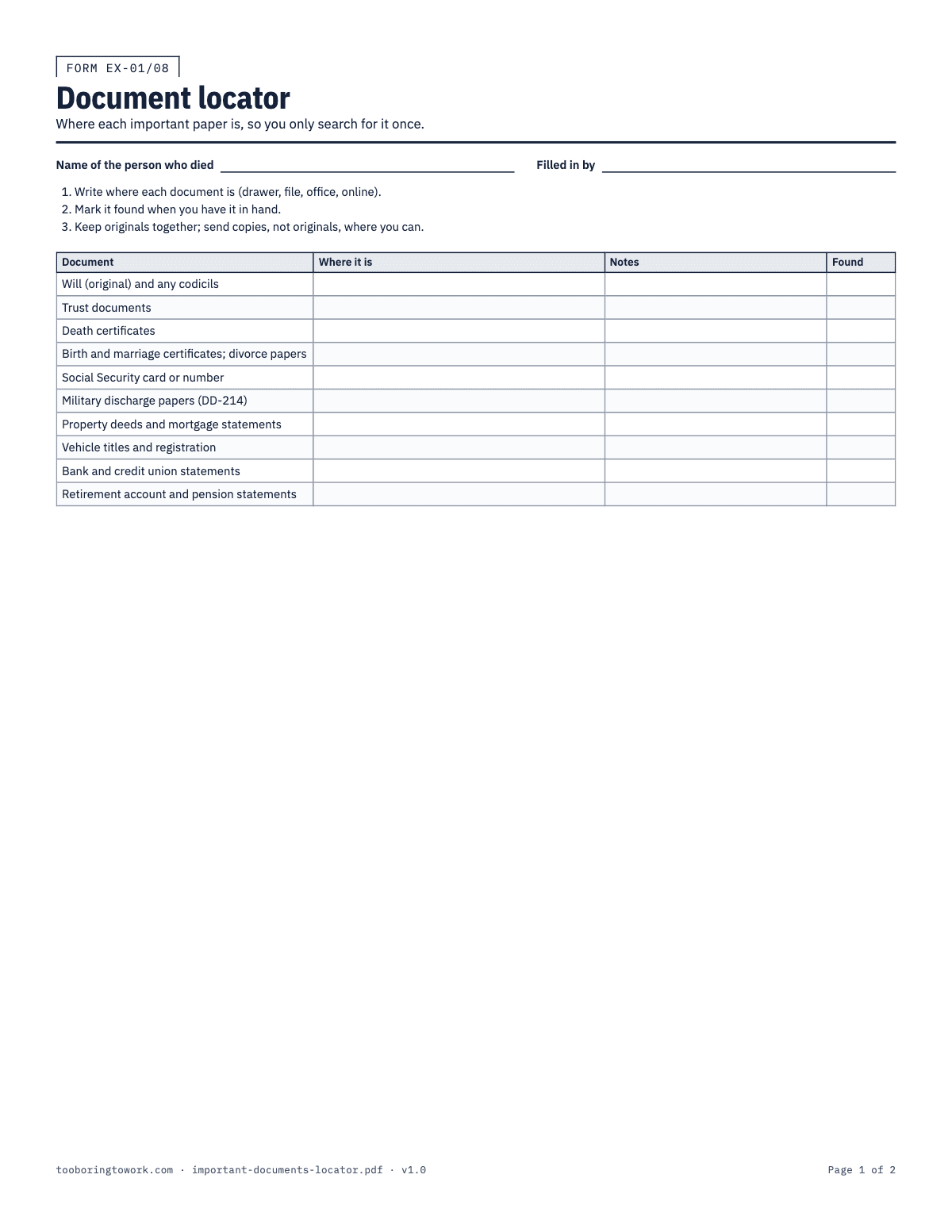
A two-page list of the papers an executor usually needs, with space to note where each one is and mark it found.
- PDF · Letter
Included in The Executor Kit ($39), with 7 other files.
Instant download. One payment. 14-day refunds.
What this is for
Almost every task after a death starts with a piece of paper: the will for the probate court, a deed for the house, a policy number for the life insurer, a statement for the bank. Those papers are rarely in one place. Some are in a filing cabinet, some in a safe deposit box, some with an attorney, and more and more of them exist only online. Searching for the same document twice, or discovering in month three that a retirement account existed, is one of the most tiring parts of being an executor.
This locator is a two-page printable PDF on Letter paper. At the top of page one you write the name of the person who died and who is filling in the list. Below is a table of twenty documents executors commonly need, split across the two pages, with columns for Document, Where it is, Notes and Found. The list runs from the original will and any codicils, trust documents and death certificates, through property deeds, vehicle titles, bank, retirement and brokerage statements, insurance policies and the last three years of tax returns, to the safe deposit box and key, funeral wishes, and where passwords and devices are kept.
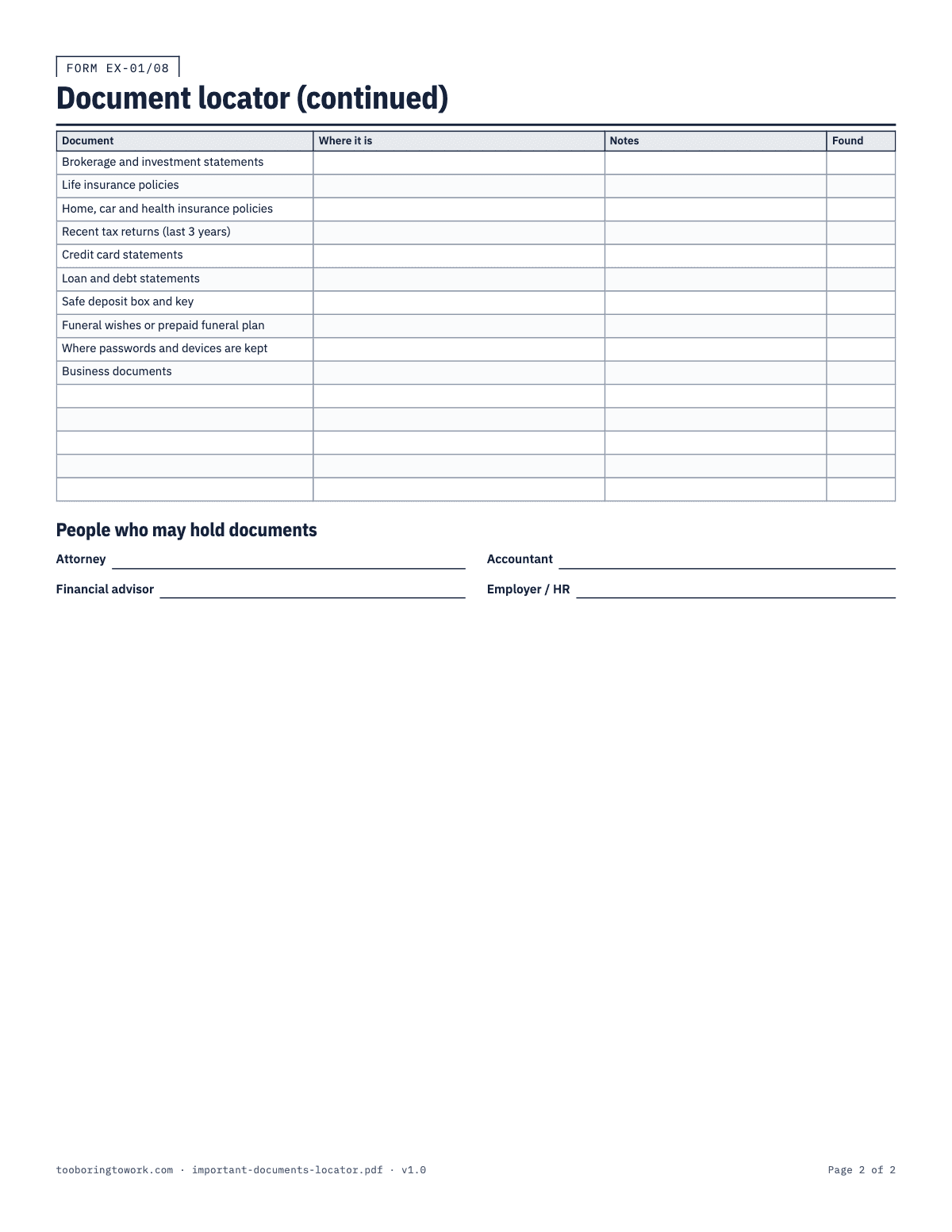
Page two ends with five blank rows for anything particular to this person, and a short section called People who may hold documents, with space for their attorney, accountant, financial advisor and employer or HR contact. Those four people often have copies of papers you cannot find at home, or know that something exists at all.
How to fill it in
- Print both pages. Write the name of the person who died and your own name in Filled in by. If family members are searching different places, give each a copy and combine the results later.
- Go down the list once without searching, and fill in Where it is for anything you already know: “fireproof box, bedroom closet”, “with attorney, Main St office”, “online banking only”. Cross out anything that clearly does not apply, such as military discharge papers for someone who never served.
- Then search the likely places: a desk, a filing cabinet, a safe, kitchen drawers, a box in the garage or attic, their email and cloud storage. Their mail over the next few weeks is also a good guide, because statements and renewal notices will keep arriving.
- Use Notes for anything useful about the document: an account number ending, the name of the insurer, whether it is an original or a copy, who else has a copy. Do not write passwords or full account numbers on the sheet.
- Tick Found only when the document is actually in your hands, or you have confirmed exactly where it is held. “Probably at the bank” is a note, not a find.
- Keep the originals together in one folder or box, in a safe place. When an organization asks for something, send a copy wherever you can, and write in Notes who has it and when it should come back.
- Fill in People who may hold documents on page two. Call the attorney first if you think there is a will but cannot find the original; many wills are kept in the office that drafted them. The accountant can often supply recent tax returns and knows about accounts that produce income.
- As documents turn up, use them to fill in the estate inventory spreadsheet: each statement or deed usually becomes a row there. If you are still in the early days, the first-week checklist shows which documents matter most straight away.
A filled-in example
| Document | Where it is | Notes | Found |
|---|---|---|---|
| Will (original) and any codicils | Attorney’s office, Oak Ave | Not in the house. Accountant remembered the attorney’s name; original held in their vault. | ✓ |
| Death certificates | Blue folder, dining room | 8 certified copies. 2 sent out so far (bank, life insurer). | ✓ |
| Military discharge papers (DD-214) | Desk, bottom drawer | Needed for VA burial benefits. Original kept; copy sent. | ✓ |
| Property deeds and mortgage statements | Fireproof box, closet | Deed found. Mortgage paid off in 2019 per the last statement. | ✓ |
| Retirement account and pension statements | Online only? | Tax return shows IRA distributions. Asked the accountant which firm. | |
| Safe deposit box and key | Key on hook in the kitchen | Bank on 2nd St. Asked what they need for access. |
Common mistakes
- Sending original documents. Once an original will or deed is in the post, it is out of your control. Keep originals together and send copies, unless the organization or the probate court explains why it needs the original.
- Assuming there is no will because you cannot find one at home. Wills are often kept with the attorney who drafted them, in a safe deposit box, or with a trusted friend or relative. Ask before concluding there is none.
- Throwing away papers while clearing the house. Old statements, envelopes and even junk mail can point to accounts, policies or debts you did not know about. Keep everything with a financial name on it until the inventory is finished.
- Giving away or selling items before the documents have been checked. A car title, a stock certificate or jewelry insured under a policy may belong on the inventory, or be left to someone specific in the will.
- Writing passwords on the sheet. The locator is meant to be shared with family. Write where the passwords are kept, such as a notebook or a password manager, and keep that itself secure.
What the rules say
Certified copies of a death certificate come from the vital records office of the state where the death happened. You can order them online, by mail or in person; at first, only certain close relatives can get copies.
Source: USAGov, How to get a certified copy of a death certificateBeing reviewed
The surviving spouse or representative files the person’s final federal tax return, usually due April 15 of the year after the death. On a paper return, write "deceased", the person’s name and the date of death across the top.
Source: IRS, Filing a final federal tax return for someone who has diedBeing reviewed
Last reviewed September 29, 2026. We link to official sources; your local rules may differ, so check them.
Questions
- What documents does an executor need?
- Usually the original will, certified death certificates, and proof of appointment from the probate court (letters testamentary or letters of administration). Beyond that, you need records of everything the person owned and owed: deeds, titles, account statements, insurance policies, tax returns and loan statements. This locator lists the twenty most common.
- Where do I find the original will?
- Start with their home papers, a safe or a safe deposit box. If it is not there, ask their attorney, since many are kept by the office that drafted them. It can also be worth asking the probate court clerk in the county where they lived whether a will has been filed there.
- How do I get certified copies of a death certificate?
- From the vital records office of the state where the death happened, online, by mail or in person. At first, only certain close relatives can order them. The funeral home often orders a first batch for you.
- How do I find out if they had a safe deposit box?
- Look for a small, flat key, often with a number stamped on it, and for a yearly box rental fee on their bank statements. The bank will explain what it needs before it lets anyone open the box, which may depend on your state’s rules and whether you have been appointed executor.
- Do I need their tax returns?
- Yes, usually. The last few returns show income from bank accounts, investments and retirement plans, which helps you find assets. The executor or surviving spouse also files the person’s final tax return, and earlier returns make that easier.
- What if I cannot find an important document?
- Write what you know in Notes and ask the organization that issued it. Banks, insurers and retirement plans can confirm accounts and send replacement statements once they have a death certificate and proof of your role. The estate task tracker is a good place to track those requests.