Letters Informing a Bank and Others of a Death
Five editable letters to tell a bank, an energy supplier, a pension provider, the credit reference agencies and a landlord about a death.
- Word
Included in The Executor Kit (UK) (£32), with 7 other files.
Instant download. One payment. 14-day refunds.
What this is for
Many organisations now have a bereavement team, a phone line or an online form, and those are often the quickest way to tell them about a death. Some still ask for a letter, though, and a letter is useful when you want a clear written record of what you asked for and when. Finding suitable words while grieving is genuinely difficult. These letters give you plain, polite wording that says what has happened, what you are enclosing, and what you would like the organisation to do next.
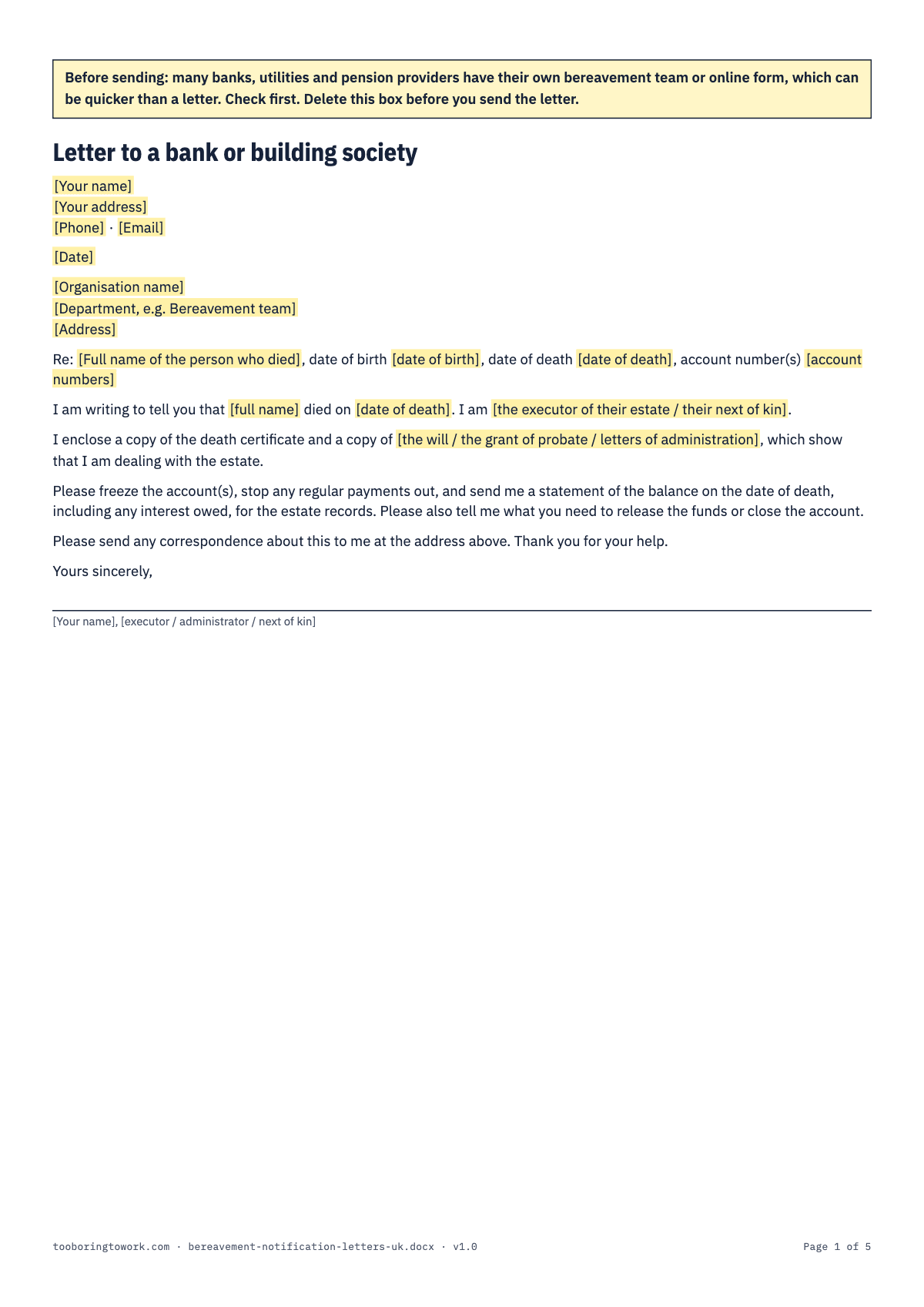
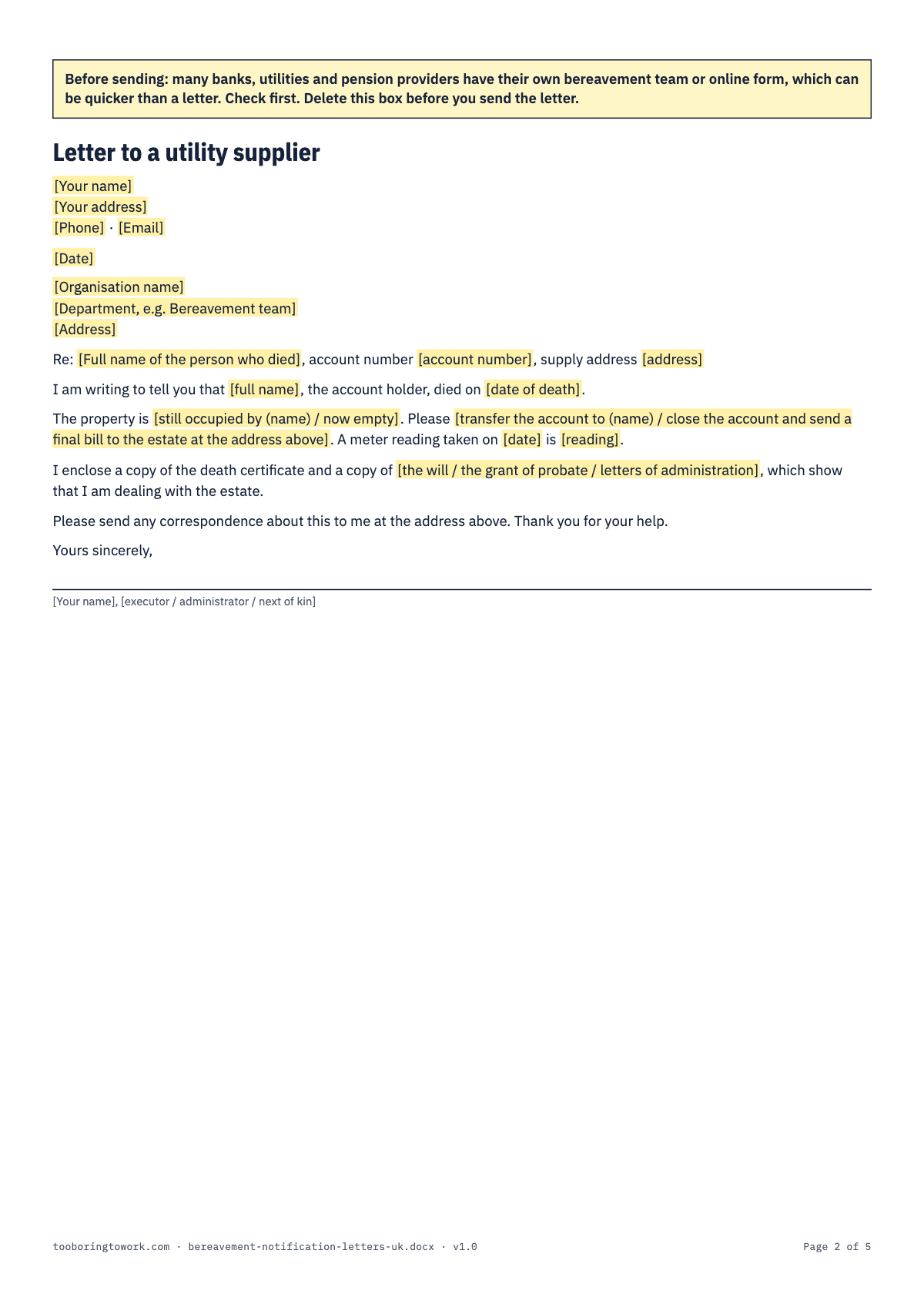
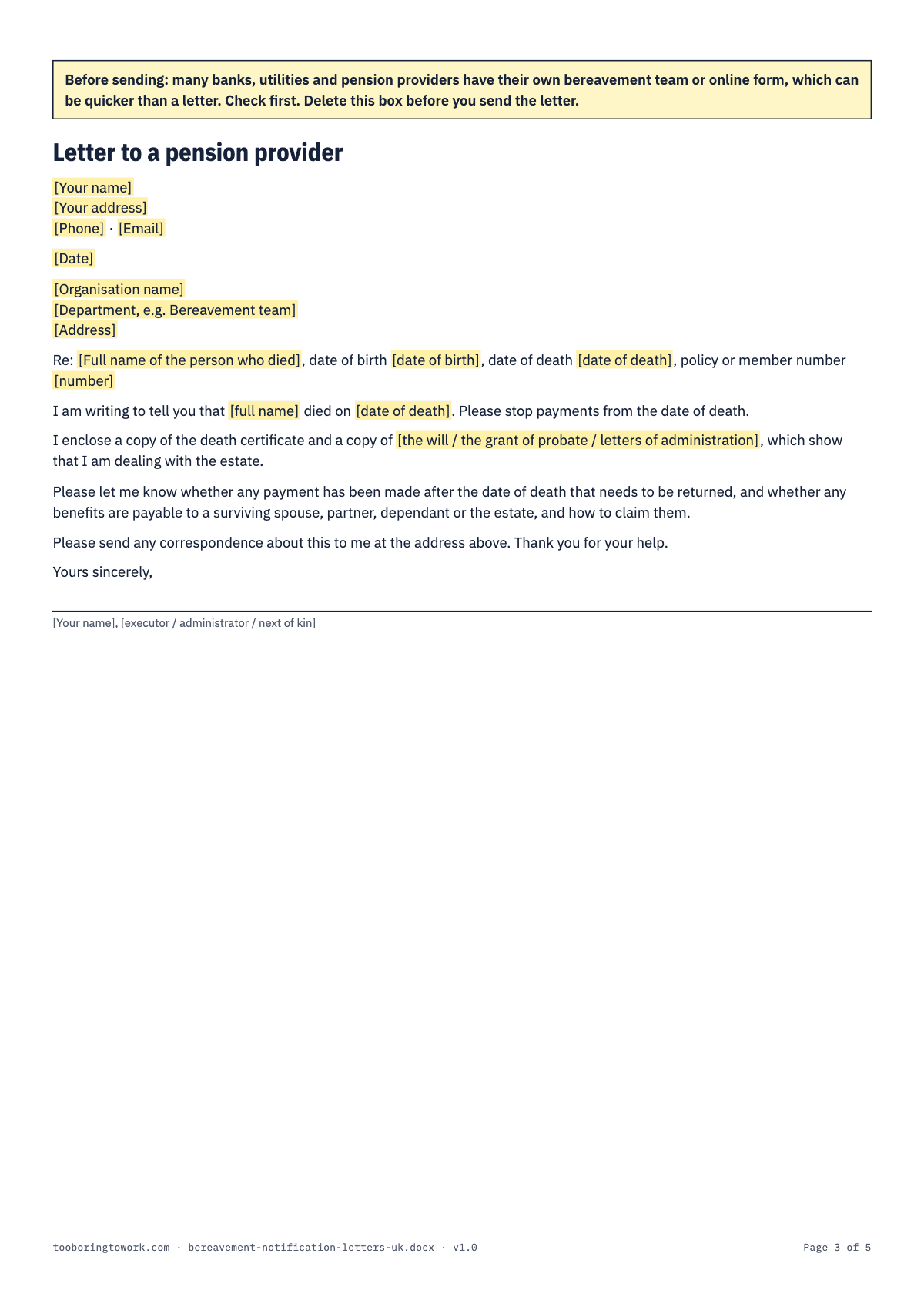
The file is a Word document on A4 with five letters: to a bank or building society, to a utility supplier, to a pension provider, to the credit reference agencies, and to a landlord. Each one has space at the top for your name, address, phone and email, the date, and the organisation’s name, department and address. A Re: line carries the full name of the person who died and the details the organisation will need to find their records. Everything you need to change is in square brackets and highlighted, so nothing is missed.
Each letter includes a sentence saying that you enclose a copy of the death certificate and a copy of the will, the grant of probate or letters of administration, whichever you have. Choose the right one and delete the others. The letters do not replace Tell Us Once, which reports the death to most government organisations in one go; they are for the companies it does not reach. Sending a letter is not legal advice, and if an organisation asks for something you are unsure about, a solicitor can help.
How to fill it in
- Open the document and choose the letter you need. At the top of each one is a boxed note reminding you to check whether the organisation has its own bereavement team or online form first. If it does, you may not need the letter. Delete the box before you send anything.
- Fill in your own details at the top: [Your name], [Your address], phone and email. Replies arrive there, so choose whichever mailbox you check regularly.
- Add the date, then the organisation’s name and address. For [Department], write the bereavement team if there is one; the organisation’s website usually gives the right address for letters about a death.
- Complete the Re: line. For the bank, pension and credit reference letters, it asks for the date of birth and date of death, plus account or member numbers or the last address. The utility letter asks for the account number and supply address; the landlord letter asks for the address of the tenancy.
- Read the body of the letter and change the bracketed choices to fit. The bank letter asks for the accounts to be frozen, regular payments out to be stopped and a statement of the balance on the date of death. The utility letter asks you to say whether the property is still occupied, whether to transfer or close the account, and to give a meter reading and its date. The pension letter asks whether anything was paid after the death that needs returning, and whether any benefits are payable to a partner, dependant or the estate. The landlord letter opens a conversation about ending the tenancy, the notice period, belongings and the deposit.
- For the credit reference agencies, print the letter three times and send one copy each to Experian, Equifax and TransUnion. It asks them to add a deceased marker to the person’s credit file, so no new credit can be taken out in their name, and to send you a copy of the file so you can check for accounts you did not know about.
- Choose the right wording in the enclosures sentence and delete the options that do not apply. Enclose copies, not originals. Use your signature line to say whether you are the executor, the administrator or the next of kin.
- Keep a copy of every letter you send, and record it in the who to inform list: the date, what you enclosed and what should happen next. For anything important, a tracked or signed-for postal service gives proof of delivery.
A filled-in example
| Part of the letter | Placeholder | What Leila wrote |
|---|---|---|
| Organisation | [Organisation name] / [Department] | Northgate Building Society, Bereavement Services |
| Re: line | [Full name], date of birth, date of death, account number(s) | Farah Khan, born 02/03/1948, died 11/08/2026, savings account ending 3317 |
| Opening | [the executor of their estate / their next of kin] | the executor of her estate |
| Enclosures | [the will / the grant of probate / letters of administration] | the will (copy). Death certificate copy also enclosed. |
| Signature | [executor / administrator / next of kin] | Leila, executor |
| Follow-up | Not in the letter | Bank asked for the grant before releasing funds. Leila noted it and sent a copy once probate was granted. |
Common mistakes
- Sending the original will or your only death certificate. Originals can be delayed or lost in the post. Send copies unless an organisation insists, and ask for anything original to be returned.
- Forgetting to delete the note box and unused options. A letter still showing "[the will / the grant of probate]" looks unfinished and can cause confusion about what you enclosed.
- Asking a bank to close an account that was held jointly. A joint account may pass to the surviving holder. The letter asks for accounts to be frozen, so check which accounts are in the person’s sole name before sending it.
- Posting letters without keeping a copy or a note of the date. When a reply is slow, being able to say exactly what you sent, and when, helps a great deal.
- Writing when a quick call would do. Specialist teams can often handle everything by telephone, confirm which evidence they accept, and spare you weeks of correspondence.
What the rules say
Tell Us Once lets you report a death to most government organisations in one go, including HMRC, DWP, the Passport Office, DVLA and the local council. It is not available in Northern Ireland and does not tell banks, utilities or other companies.
Source: GOV.UK, What to do after someone dies: Tell Us OnceBeing reviewed
Probate is the legal right to deal with someone’s money, property and possessions after they die. Executors named in the will apply, or the closest relative if there is no will. It may not be needed if the person only had savings, or if things were owned jointly.
Source: GOV.UK, Applying for probateBeing reviewed
Last reviewed 29 September 2026. We link to official sources; your local rules may differ, so check them.
Questions
- How do I write a letter to a bank informing them of a death?
- Give the full name of the person who died, their date of birth and date of death, and their account numbers. Say who you are, enclose a copy of the death certificate and proof you are dealing with the estate, and say what you would like the bank to do. The bank letter in this file sets all of that out.
- Do I need probate before I write to the bank?
- No. You can tell the bank about the death straight away. Whether it will release money without a grant depends on its own rules and the amount held. Probate may not be needed if the person only had savings or things were owned jointly.
- Why write to the credit reference agencies?
- Asking for a deceased marker on the credit file helps prevent anyone opening new credit in the person’s name. A copy of the file can also show accounts or debts the family did not know about, which is useful for the assets and debts register.
- Does Tell Us Once mean I do not need to write to anyone?
- Tell Us Once covers most government organisations, including HMRC, DWP, DVLA and the council, but not banks, utilities or other companies. It is also not available in Northern Ireland. You will still need to contact private organisations yourself.
- Can someone who is not the executor send these letters?
- Yes. Relatives, including a spouse, partner or adult child, can notify organisations, and the signature line allows for that. When money needs to be released or an account closed, most organisations will want to deal with the executor or administrator.