First-Time Landlord Checklist
Everything to set up before the first tenant moves in: money, insurance, safety, rules to look up, screening, move-in and routine.
- PDF · Letter
Included in The Landlord Kit ($29), with 7 other files.
Instant download. One payment. 14-day refunds.
What this is for
Plenty of people become landlords by accident: a job moves them across the country, they marry someone who already owns a house, or the market is too slow to sell. The first tenant is often found within weeks, and the paperwork is figured out afterward, one surprise at a time. This checklist puts the surprises in order, so you find out about the insurance gap, the lead disclosure and the deposit rules before the lease is signed rather than after. There is a longer walk-through of the first year on the page for first-time landlords.
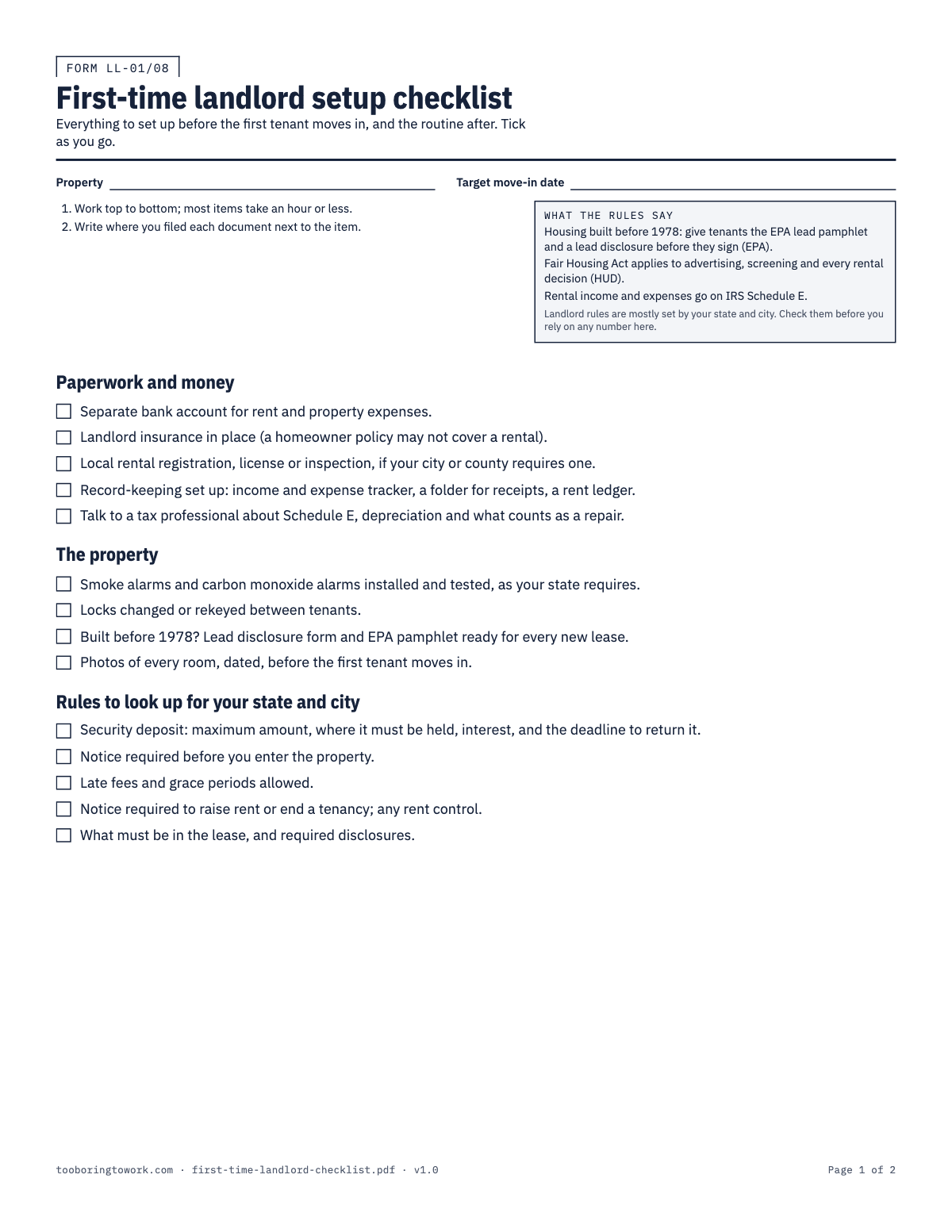
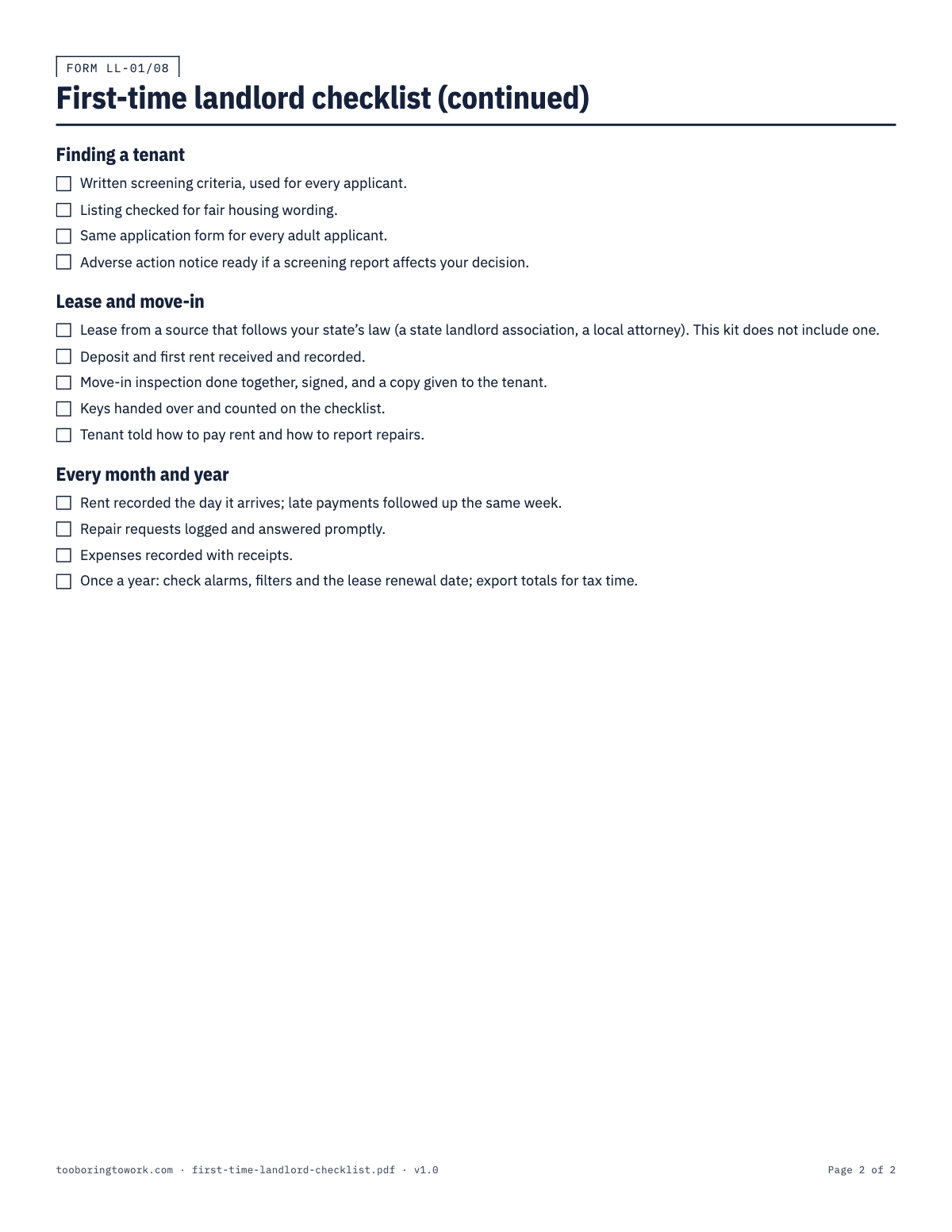
It is a two-page, Letter-size PDF with fields for the property and your target move-in date. Page one covers paperwork and money (a separate bank account, landlord insurance, any local rental registration or license, record-keeping, a talk with a tax professional), the property (smoke and carbon monoxide alarms, locks rekeyed, lead disclosure for older homes, dated photos of every room) and rules to look up for your state and city: deposit limits, holding, interest and return deadlines, entry notice, late fees and grace periods, notice to raise rent or end a tenancy, rent control, and required lease contents and disclosures. Page two covers finding a tenant, lease and move-in, and a short every month and year routine.
A rules box at the top names the three federal rules that apply to nearly every small landlord: the EPA lead disclosure for housing built before 1978, the Fair Housing Act for advertising, screening and every rental decision, and IRS Schedule E for reporting rental income and expenses. Everything else depends on where the property is, which is why the checklist gives you a list of questions to answer for your state and city rather than answers that would be wrong in most of them. It does not include a lease, deliberately: get one that follows your state’s law.
How to fill it in
- Fill in Property and Target move-in date at the top, then work from top to bottom. Most items take an hour or less. Next to each one, write where you filed the document, such as "insurance: email folder, policy PDF" or "lead form: blue binder".
- Paperwork and money first. Open a separate bank account for rent and property costs. Call your insurer and ask directly whether your current homeowner policy covers a rental; it may not, and landlord insurance is a different product. Ask your city or county whether rentals need registration, a license or an inspection.
- Set up your records before the first dollar arrives: a rent ledger, an income and expense tracker and a folder for receipts. Book time with a tax professional to talk through Schedule E, depreciation and the difference between repairs and improvements.
- Walk the property. Test every smoke and carbon monoxide alarm and install any your state requires. Rekey or change the locks. If the home was built before 1978, get the lead disclosure form and the EPA pamphlet ready for every new lease. Take dated photos of every room.
- Work through "Rules to look up for your state and city" and write the answer next to each line, with where you found it. These are the rules that change most from place to place, and the ones most likely to cost money if guessed.
- On page two, write your screening criteria and check your listing wording before you advertise. Use the same application for every adult applicant, and have an adverse action notice ready in case a screening report affects your decision. The tenant screening checklist covers these steps in detail.
- Get a lease from a source that follows your state’s law, such as your state landlord association or a local attorney. Record the deposit and first rent when they arrive. Do the move-in walkthrough together with the move-in and move-out inspection checklist, sign it, give the tenant a copy, and count the keys.
- Before the tenant moves in, tell them how to pay rent and how to report repairs. Then keep page two’s last section somewhere visible: rent recorded the day it arrives, repair requests logged and answered promptly, expenses recorded with receipts, and a yearly check of alarms, filters, the lease renewal date and your tax totals.
A filled-in example
| Item | Done | Where it is filed / note |
|---|---|---|
| Separate bank account for rent and property expenses | Yes | Credit union checking, opened 06/02 |
| Landlord insurance in place | Yes | Switched from homeowner policy; declarations page in the property binder |
| Built before 1978? Lead disclosure form and EPA pamphlet ready | Late | House built 1962. Printed pamphlet and form 06/20; move-in pushed to 07/01 so tenant has them before signing |
| Photos of every room, dated | Yes | 48 photos, folder "Oak Ave move-in 2026" |
| Security deposit: maximum, holding, interest, return deadline | Yes | Answers and link to state statute written on back of page |
Common mistakes
- Keeping the homeowner policy after the house becomes a rental. A homeowner policy may not cover a property you rent out. Ask the insurer in writing, and get the answer in writing.
- Copying another landlord’s numbers. The deposit limit, entry notice and late fee rules your friend follows may be legal in their state and wrong in yours. Look up each item on the "rules to look up" list for the property’s own state and city.
- Forgetting the lead disclosure on an older house. For homes built before 1978, the EPA requires the pamphlet, a disclosure of known lead paint or hazards, and a Lead Warning Statement in the lease, and the signed disclosure must be kept for 3 years.
- Running rent and repairs through a personal account. At tax time, separating twelve months of mixed transactions takes a weekend. A separate account from day one takes an afternoon.
- Downloading a generic lease. Leases have to follow state and often local law, and a form written for another state can include terms that are unenforceable where you are, or leave out required disclosures.
What the rules say
For housing built before 1978, landlords must give tenants the EPA pamphlet "Protect Your Family From Lead in Your Home", disclose known lead paint or hazards, include a Lead Warning Statement in the lease, and keep the signed disclosure for 3 years.
Source: EPA, Real Estate Disclosures about Potential Lead HazardsBeing reviewed
The federal Fair Housing Act bars discrimination in renting based on race, color, religion, sex, disability, familial status or national origin (42 U.S.C. §3604). State and local laws often add more protected classes.
Source: Fair Housing Act, 42 U.S.C. §3604Being reviewed
Rental income and expenses are reported on IRS Schedule E (Form 1040). Its expense lines are advertising, auto and travel, cleaning and maintenance, commissions, insurance, legal and professional fees, management fees, mortgage interest, other interest, repairs, supplies, taxes, utilities, depreciation, and other.
Source: IRS Schedule E (Form 1040), Part I lines 5–19Being reviewed
Last reviewed September 29, 2026. We link to official sources; your local rules may differ, so check them.
Questions
- What do I need to do before renting out my house for the first time?
- Get the money side ready (a separate account, landlord insurance, a way to record rent and expenses), make the property safe (alarms, locks, lead disclosure if it was built before 1978), look up your state and city rules on deposits, entry, late fees and rent increases, and get a lease that follows your state’s law. This checklist puts all of that in order.
- Do I need a special insurance policy as a landlord?
- Usually yes. A standard homeowner policy is written for a home you live in and may not cover a rental. Ask your insurer directly, tell them the property will be rented, and get their answer in writing.
- What federal rules apply to every small landlord?
- The Fair Housing Act applies to advertising, screening and every rental decision. The EPA lead disclosure rule applies to most housing built before 1978, with some exemptions. Rental income and expenses are reported on IRS Schedule E. Most other landlord rules, including deposits, notice periods and late fees, come from your state and city.
- How do I pay taxes on rental income?
- Rental income and expenses are reported on Schedule E of Form 1040. Keep a record of every payment and expense from the start, with receipts, and talk to a tax professional about depreciation and whether any costs are improvements rather than repairs. This is general information, not tax advice.
- Where do I get a lease?
- From a source that follows your state’s law: your state’s landlord or apartment association, a local attorney, or sometimes your state or city housing department. This kit doesn’t include a lease on purpose, because a generic one is likely to be wrong somewhere in your state.
- What should I do every year as a landlord?
- Check smoke and carbon monoxide alarms, replace filters, note the lease renewal date and decide on any rent change well before your required notice period, and export your yearly income and expense totals for tax time. The last section of the checklist lists these so they don’t depend on memory.