Landlord Letter Templates
Three editable letters: a late rent reminder, a notice of entry and a rent increase notice, each with a check-your-rules box.
- Word
Included in The Landlord Kit ($29), with 7 other files.
Instant download. One payment. 14-day refunds.
What this is for
Most landlord communication is a phone call or a text, and that is fine until something goes wrong. Then the question is what you told the tenant, and when, and in what words. Three situations come up again and again for small landlords: rent hasn’t arrived, you need to get into the unit, and the rent is going up. Each deserves a short, polite letter with the date on it and a copy in the tenant’s file. Writing it down also cools things off: a calm paragraph on paper lands better than an irritated message sent from a parking lot, and it gives a mediator or judge something neutral to read if it ever comes to that.
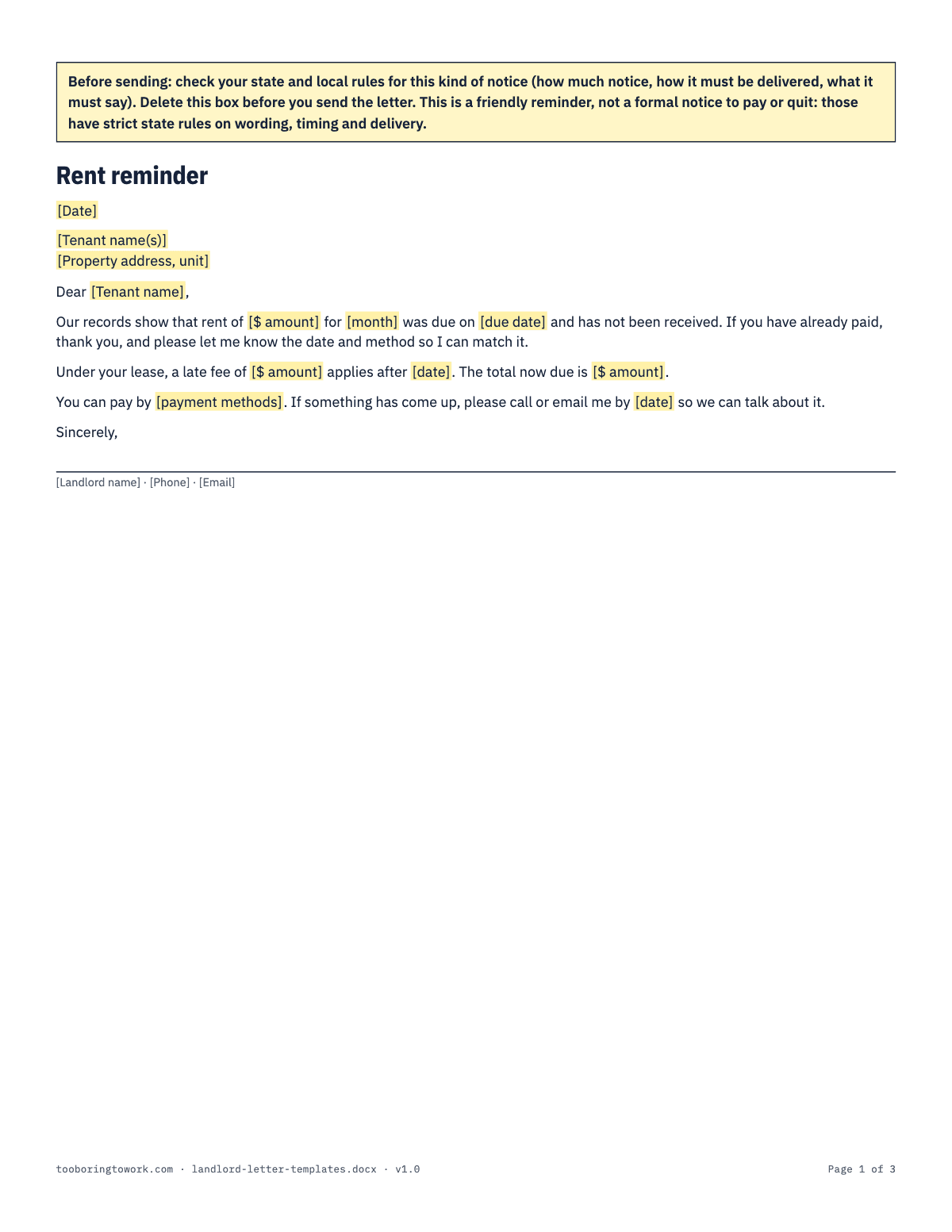
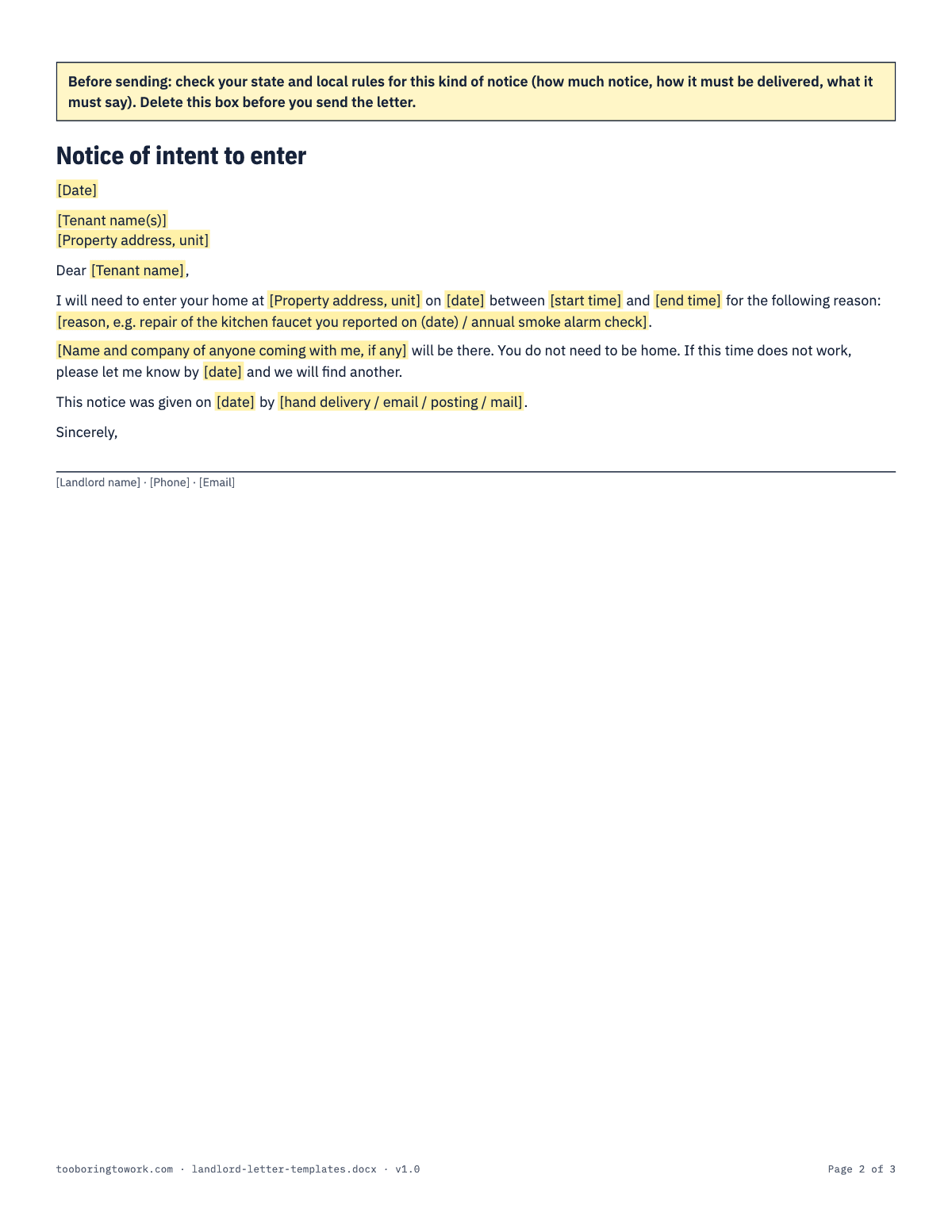
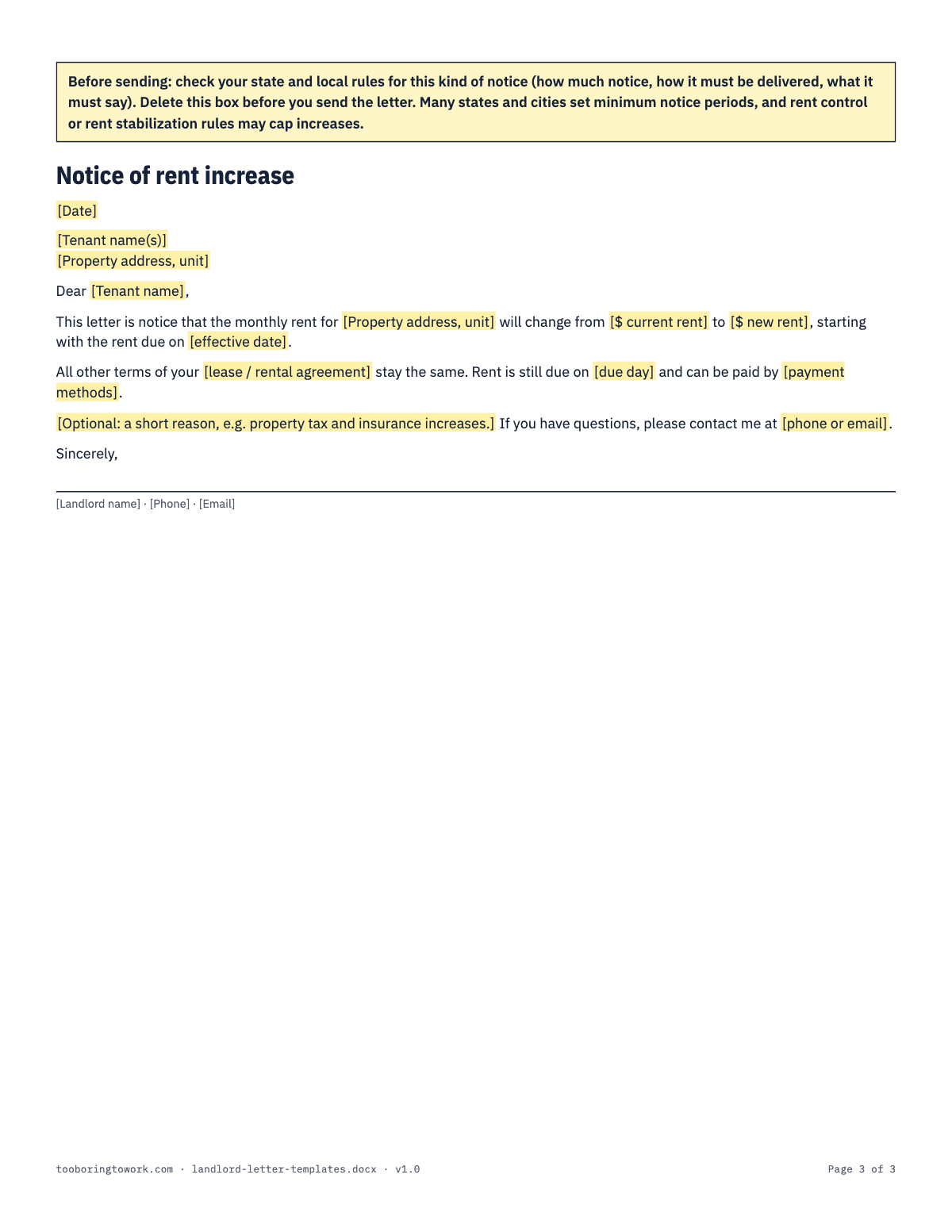
This is a single Word document with three letters in it. The late rent reminder says that rent for a given month was due on a given date and has not been received, mentions the late fee under the lease if there is one, gives the total now due and how to pay, and asks the tenant to get in touch if something has come up. The notice of entry gives the date, a time window and the reason, names anyone coming with you, tells the tenant how to ask for a different time, and records how and when the notice was delivered. The rent increase notice states the current rent, the new rent and the date it starts, and confirms the other lease terms stay the same. Every blank is highlighted in square brackets, and each letter ends with a signature line for your name, phone and email.
At the top of each letter is a highlighted box: check your state and local rules for this kind of notice (how much notice, how it must be delivered, what it must say), then delete the box before sending. It is there because those rules vary by state and city, and a letter sent with the wrong notice period can be worse than none. The late rent reminder is exactly that, a reminder. It is not a pay-or-quit notice or any other formal eviction notice; those have strict state rules on wording, timing and delivery and are not included. These are plain letters, not legal advice.
How to fill it in
- Open the Word file and save a copy for the tenant and the date, such as "Unit B entry notice 2026-04-14". Keep the original clean for next time.
- Read the check-your-rules box on the letter you are using, and do the checking before you write anything else. For a notice of entry, look up how much notice your state requires and which delivery methods count. For a rent increase, look up the minimum notice period and whether any rent control or rent stabilization rules apply. For a late rent reminder, check what your lease says about the due date, grace period and late fee.
- Fill in the highlighted blanks: date, tenant names, property address and unit. Then the details for the letter itself: amount and month for the late rent reminder; date, time window and reason for the entry notice; current rent, new rent and effective date for the increase.
- For the late rent reminder, take the amount, the due date and any late fee from your rent ledger, so the letter matches the record. Keep the tone neutral; the first line already allows for the chance that the tenant has paid and you haven’t matched it.
- For the notice of entry, give a specific window, not "sometime Tuesday". If you are coming about a repair, name it and refer to the date the tenant reported it on the maintenance request form. Fill in the delivery line: the date you gave notice and how (hand delivery, email, posting or mail).
- For the rent increase notice, the effective date should line up with a rent due date, and must be far enough away to meet your state and local notice period and your lease. The optional reason line can go, or stay short: a sentence about taxes and insurance is plenty.
- Read the finished letter once out loud. Anything that sounds like a threat, sarcasm or a guess about the tenant’s motives comes out. Stick to facts, amounts, dates and what you are asking for, and offer a way to reach you.
- Delete the check-your-rules box, sign, and deliver the letter by a method your state accepts. Keep a copy, with the date and method, in the tenant’s file.
A filled-in example
| Blank | Filled in | Checked against |
|---|---|---|
| [Tenant name(s)] | R. Alvarez | Lease |
| [date] and time window | Thursday 04/16, 10 a.m. to 12 p.m. | First drafted for 04/15; moved one day to meet the state notice period |
| [reason] | Replace bathroom exhaust fan you reported on 04/09 | Repair log row for 04/09 |
| [Name and company of anyone coming] | S. Park, Park Electric | Contractor confirmation |
| Notice given on [date] by [method] | 04/14, by email and posted on the door | Delivery methods allowed in the state |
Common mistakes
- Sending the letter with the check-your-rules box still on it. It tells the tenant you didn’t check, and you probably didn’t. Do the checking, then delete it.
- Using the late rent reminder as if it were a formal notice. A reminder starts no legal clock. If rent stays unpaid and you are considering eviction, you need your state’s formal notice, with its exact wording and delivery, and often a local attorney.
- Adding a late fee the lease does not include, or one your state or city does not allow. The letter only repeats the lease; it does not create a new charge.
- Raising rent by text with a week’s warning. Rent increases usually need written notice well ahead of time, and the period depends on your state, city and lease. Find out the required notice before you pick the date.
- Not recording how and when a notice was delivered. The delivery line in the notice of entry is there for a reason. Fill it in, and keep a copy or a photo of the posted notice.
Questions
- Is a late rent reminder the same as a notice to pay or quit?
- No. A reminder is a courtesy letter that says rent is late and asks the tenant to pay or get in touch. A pay-or-quit notice is a formal legal notice, usually the first step toward eviction, with strict state rules on wording, timing and delivery. This pack does not include one.
- How much notice does a landlord have to give before entering?
- It depends on your state and sometimes your city, and local rules may also say when during the day you can enter and for what purposes. The notice of entry letter leaves the timing to you and has a box reminding you to check your state and local rules. Emergencies are usually treated differently.
- How much notice is required for a rent increase?
- That is set by your state, sometimes by your city, and by your lease, and it can depend on how long the tenant has lived there and how large the increase is. Some areas have rent control or rent stabilization that also limits the amount. Check your state and local rules before you set the effective date.
- Can I send these letters by email?
- Sometimes. Whether email counts depends on your state and on the kind of notice, and a lease clause about electronic notices may matter too. The letters have a line to record how you delivered them. Check what your state accepts for each kind of notice.
- Can I edit the wording?
- Yes, the file is a normal Word document. Keep the letters short and factual, keep the key details (dates, amounts, reason), and make sure any wording your state requires is included. Save your edited version as your own template, and add your logo or mailing address to the header if you like; tenants rarely object to tidy paperwork.
- Are these letters legal advice?
- No. They are plain, editable letters for everyday situations. Anything that could lead to court, such as eviction, a disputed deposit or a lease violation, is a good time to talk to a local attorney or your state landlord association.